








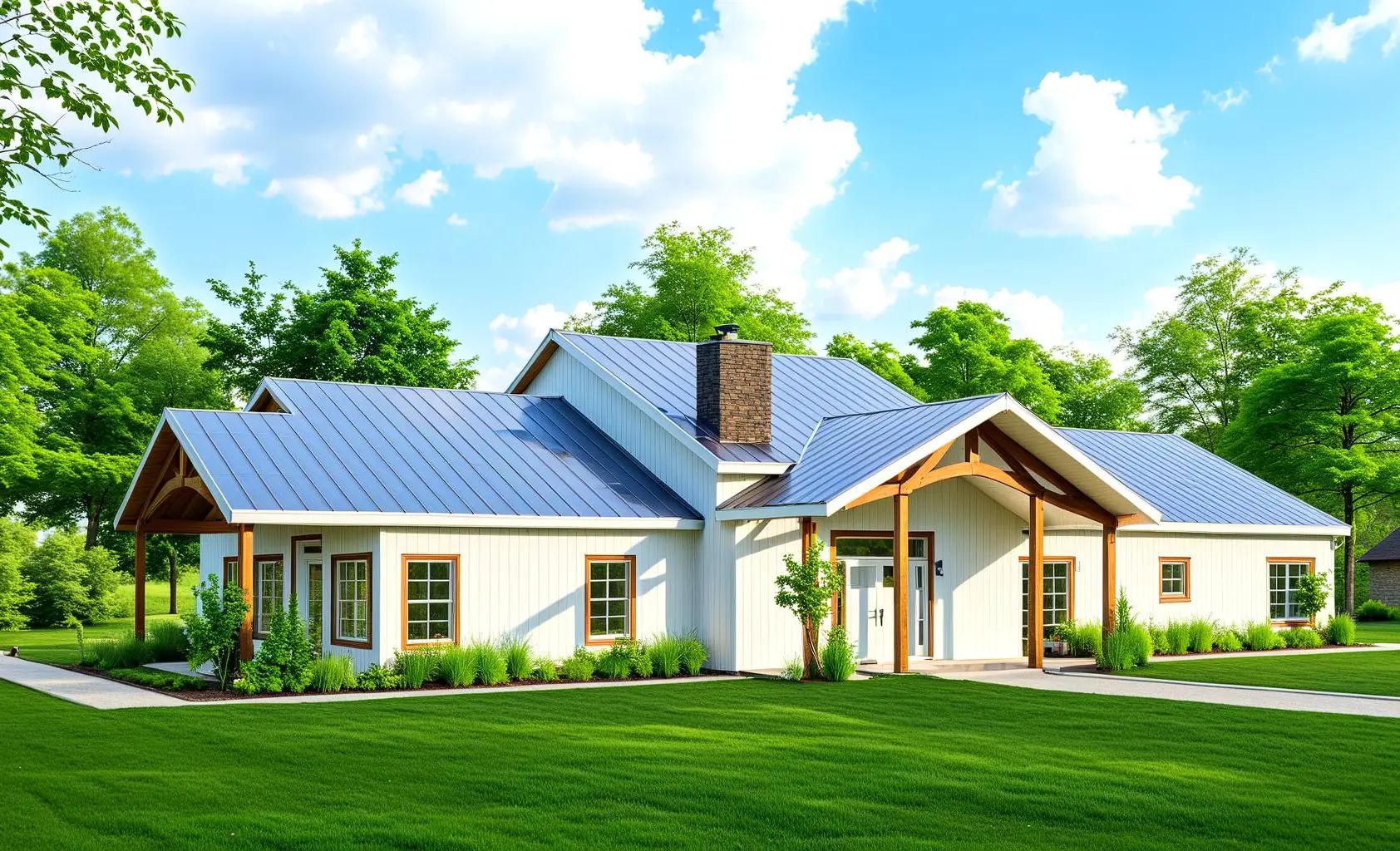
Rural America is undergoing a quiet yet profound transformation. The traditional model of single-purpose agricultural land is giving way to a new era of multi-functional, self-sustaining properties that integrate living, working, and production within one ecosystem. At the heart of this evolution lies a new form of adaptive architecture: the barndominium. Through the innovations of builders like Lancaster Barndominium, these hybrid steel-framed structures have become catalysts for economic diversification, supporting a new generation of rural entrepreneurs, small-scale producers, and creative professionals.
Redefining the Rural Asset Model
Historically, rural real estate followed a linear economic logic: land was either residential, agricultural, or commercial. The modern barndominium disrupts this segmentation. By merging residential comfort with industrial-grade functionality, it allows owners to live, work, and operate income-generating ventures within a single, code-compliant footprint.
Lancaster Barndominiums are engineered with this multi-use capacity in mind. Their large open spans, adaptable layouts, and modular extensions allow for studios, workshops, or small agribusiness operations under the same roof as living spaces. This flexibility aligns with changing economic realities, where remote work, e-commerce, and sustainable micro-production are replacing traditional rural livelihoods.
The Rise of Agrarian Micro-Economies
Micro-economies—localized networks of production and exchange—are becoming central to the revival of rural regions. Lancaster’s barndominium model enables property owners to establish diversified income sources, from artisanal production to agricultural processing, without needing to lease or build separate structures.
This has a measurable economic effect. By lowering capital barriers and land-use friction, such hybrid properties increase productivity per acre. In Lancaster County and similar regions, these developments have supported small-scale breweries, boutique food processing units, and home-based workshops that contribute directly to local supply chains.
Architectural Flexibility and Economic Adaptation
The economic resilience of barndominiums stems from their architectural adaptability. Unlike traditional homes, which are spatially static, Lancaster’s steel-framed systems are designed for modular evolution. Owners can convert storage areas into production zones, integrate retail spaces, or expand vertically to create multi-unit dwellings—all without compromising structural integrity.
This adaptive capacity reflects a deeper shift in rural economics: the move from commodity dependence to creative diversification. Properties are no longer viewed solely as static assets but as active economic instruments capable of generating ongoing value.
Integrating Technology into Rural Development
The modern barndominium integrates technology as a foundational design principle. Smart automation, solar systems, and energy-efficient envelopes make these structures self-sustaining and digitally connected. This infrastructure supports the rise of rural professionals whose work relies on remote connectivity—designers, engineers, digital marketers, and agritech specialists.
By embedding high-performance technology into rural housing, Lancaster Barndominiums bridge the infrastructure gap between urban and rural areas. This digital parity is essential for attracting young entrepreneurs and reversing rural depopulation trends.
The Land-Use Advantage: Zoning and Policy Synergy
Many rural zoning frameworks are now recognizing the potential of mixed-use residential-agricultural properties. Lancaster Barndominiums are designed to comply with these evolving regulations, giving owners the ability to combine habitation with low-impact commercial use legally.
This compliance-driven flexibility creates a synergy between architecture and policy. Instead of viewing mixed-use development as a challenge, counties can leverage it as a growth mechanism—revitalizing rural economies without extensive infrastructure investment. The result is a sustainable cycle where architectural innovation directly informs local economic planning.
Environmental Economics and Sustainable Productivity
Lancaster’s steel-based construction model also intersects with environmental sustainability. High-efficiency insulation, rainwater harvesting systems, and low-energy building envelopes reduce operational costs while promoting responsible land use.
From an economic standpoint, these efficiencies allow rural entrepreneurs to lower their operational expenses. For example, a barndominium-based workshop that integrates passive heating and solar generation achieves significant savings over time, enabling profitability even at small production scales. The environmental and economic benefits reinforce one another, illustrating how intelligent building design can nurture long-term local sustainability.
Property Value Multipliers in Mixed-Use Development
Traditional rural homes appreciate slowly, often limited by geographic demand. However, Lancaster Barndominiums possess inherent value multipliers: structural longevity, low maintenance, and functional diversity. Because these properties can support income generation, their appraised values often exceed those of comparable single-use rural homes.
Moreover, financial institutions are beginning to recognize the stable performance of such properties. Barndominiums with documented hybrid use demonstrate lower default risks, as income diversification enhances owner stability. Over time, this recognition will likely expand into dedicated financing products tailored to mixed-use rural housing.
Local Supply Chain Reinforcement
Barndominiums do not just empower individual owners; they strengthen local economies through supply chain reinforcement. The ability to process, store, and distribute goods locally reduces dependency on external logistics networks.
Lancaster’s clients, for instance, often source materials and services from nearby suppliers—steel fabricators, insulation manufacturers, and tradespeople. This local sourcing creates circular economic systems, keeping capital within the region and promoting rural industrial growth.
Social Transformation Through Architectural Access
Beyond economics, there is a social dimension to this transformation. The affordability and scalability of Lancaster Barndominiums enable first-time rural homeowners and small business owners to enter the property market with lower upfront costs.
This democratization of ownership fosters community-level regeneration. As more residents establish income-generating operations on their land, local economies grow organically without reliance on external capital or large-scale development projects. The architecture itself becomes a vehicle for rural empowerment and social stability.
The Future of Rural Real Estate Development
The convergence of adaptive architecture, digital infrastructure, and evolving policy frameworks marks a turning point in rural real estate. Lancaster Barndominiums exemplify how a single architectural typology can serve as both a residential solution and a regional development tool.
In the coming decade, the growth of mixed-use rural housing will likely accelerate. Counties may adopt incentives for hybrid development, and investors could view rural properties as viable portfolios rather than peripheral assets. The barndominium—once a niche concept—is now positioned to become a core component of America’s rural economic renewal.
Conclusion: Architecture as Economic Infrastructure
Lancaster Barndominium’s design philosophy transcends construction. It reflects a broader vision of how architecture can act as economic infrastructure—integrating habitation, production, and sustainability into a unified ecosystem.
By enabling individuals to build, work, and thrive within a single structure, these barndominiums redefine the economic geography of rural America. They are not just homes or workshops; they are self-contained engines of value creation. As the balance between urban and rural economies continues to shift, Lancaster’s model offers a tangible blueprint for a more resilient, decentralized, and equitable future.
FAQs
Q: How do Lancaster Barndominiums support multiple uses within one property?
A: Their modular steel-frame design allows integration of residential, commercial, and agricultural functions, enabling owners to combine living and business operations seamlessly.
Q: What makes barndominiums relevant to rural economic growth?
A: They reduce capital barriers for entrepreneurs, create localized production capacity, and support small-scale agribusiness—all within a single structure.
Q: Are these properties compliant with rural zoning laws?
A: Yes. Lancaster Barndominiums are engineered to meet mixed-use zoning regulations, allowing owners to operate low-impact commercial activities legally.
Q: How does the model contribute to sustainability?
A: Through energy-efficient design, prefabricated construction, and low-carbon materials, these structures reduce both environmental impact and long-term operational costs.
Q: Can such properties influence real estate appreciation in rural areas?
A: Absolutely. Their hybrid usability and income potential often result in faster appreciation and stronger resale performance than conventional rural housing.